Listings use a lot of craft words. Here’s what they mean in practice.
Engraving
Laser engraving is by far the most common method for personalised gifts. A computer-controlled laser marks or removes a thin layer of the surface — no inks, and the result matches the on-screen design closely. It works on wood, slate, leather, glass, acrylic and coated metals.
Rotary and diamond-drag engraving physically cut or scratch the design into metal with a tool tip. You’ll see them used for jewellery, tankards, pens and trophies.
Hand engraving is done with hand tools by a skilled engraver. Each piece is unique; expect it to cost more and take longer.
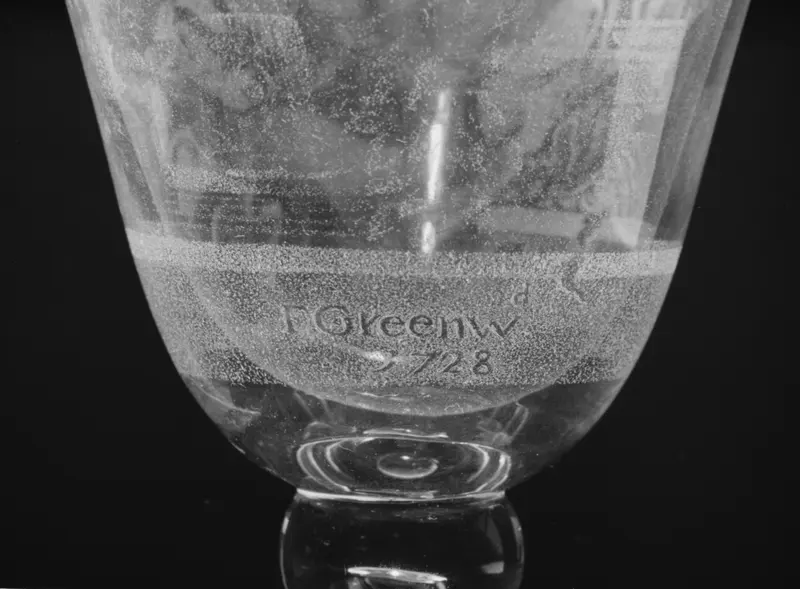
Glass can be engraved with a wheel or a diamond point, or etched — frosted with abrasive or chemical methods through a stencil. Engraved areas are usually left frosted, so the letters show up white against clear glass. The goblet pictured here was engraved by Frans Greenwood in 1728.
Embroidery
Machine embroidery uses a digitised design file and a computer-controlled machine, giving neat, repeatable lettering. Hand embroidery is stitched by a person and each piece varies a little.
Things that affect how embroidery looks:
- Fabric — smooth cotton shows fine detail; thick towelling and fleece need bolder, simpler letters.
- Size — very small script can blur; ask for a larger size or a simpler font.
- Thread colour — contrast matters more than you’d think. White on cream almost disappears.
Printing, debossing and the rest
For printed gifts see printed personalisation; for initials on leather see monogrammed.
Sources
Last updated 4 October 2026. General guidance only — each seller’s own instructions and terms come first.